Search this term and you’ll hit a wall of near-identical articles that all say the same vague thing. It’s a “curated information hub” delivering “verified facts.” None of them tell you who verifies anything, or how. Here’s the plain answer up front: betterthisfacts by betterthisworld is a content category within the BetterThisWorld network — short, fact-led articles on health, money, productivity. And general knowledge — not an accredited fact-checking organization with published methodology. That distinction matters enormously if you plan to cite it. What’s genuinely worth taking from the concept. Though, is its stated five-step verification workflow, which is a solid framework regardless of where you found it. This article covers what the platform actually publishes, how it compares to real fact-checkers. And the verification method you can apply to any claim yourself.
What Is BetterThisFacts, Really?
BetterThisFacts operates as a section. And recurring content theme across the BetterThisWorld network of websites — betterthisworldai.com, betterthisworld.us. And a cluster of related domains, along with third-party sites like Markletic.com that publish explainer articles about the concept. The content itself splits into two fairly distinct types, and conflating them is where most confusion starts.
The first type is practical self-improvement content: habit formation, productivity systems, budgeting methods, beginner investing explainers. The second is general-interest fact collections — kid-friendly science facts, random history oddities, that sort of thing. Both get published under the BetterThisFacts label. Which means someone searching for rigorous fact-checking. And someone searching for trivia to share with their kids land in the same place.
Is BetterThisFacts an Official Fact-Checking Organization?
BetterThisFacts is not an accredited fact-checking organization. Since it is not a member of the International Fact-Checking Network Code of Principles and has no correction policy. Financial transparency statement, or editorial team members, as other IFCN-accredited fact-checkers such as PolitiFact, Snopes, or Full Fact have. You can check this information on your own using the IFCN signatories directory which is open for everyone to search. Consider the content only as general interest publications, not as fact-checking.
The 5-Step Verification Workflow Worth Stealing
Whatever you conclude about the platform, its published verification workflow is genuinely useful. And worth applying to any claim you encounter. I’ve used a nearly identical process for years when checking sources. And the sequence matters — people usually skip step two. Which is exactly where most bad claims survive.
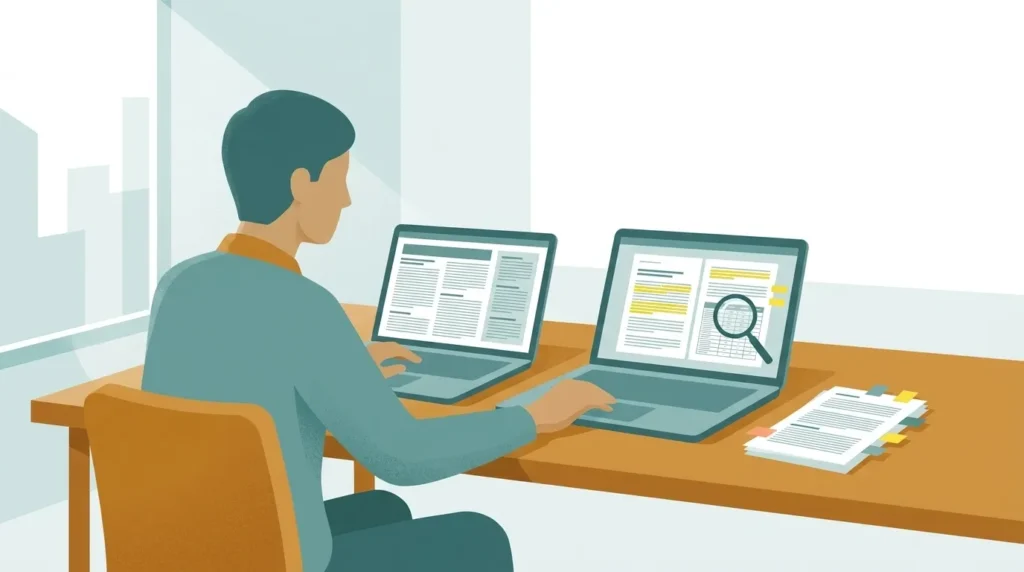
Step one: find the original source. Not the article citing the study, the study itself. Step two. Read the methods section and the publication date. Because a 2009 sample of 40 undergraduates doesn’t support a sweeping 2026 claim. Step three. Cross-check against at least two independent sources — independent meaning they didn’t all cite the same press release. Step four: note the limits and uncertainty honestly, including confidence intervals or sample size caveats the original authors flagged. Step five: record the source links and exact quotes so you can reproduce your own work later.
That last step is the one most people abandon. And it’s the one that saves you when someone challenges a claim six months later. Keep a simple document with URL, date accessed. And the specific sentence you relied on.
How Do I Check if a Fact Is Actually True?
Trace the claim back to its primary source. Then confirm two independent outlets reached the same conclusion without all citing that same original release. If you can only find the claim on aggregator sites and blogs that link to each other, you’ve found circulation. Not verification — which is a different thing entirely.
What Makes a Source Independent?
An independent source has its own data collection, authorship, and editorial process — not a rewrite of someone else’s reporting. Three news sites republishing the same wire story count as one source. Not three, and that’s the single most common mistake in casual fact-checking.
Why betterthisfacts by betterthisworld Ranks So Well for So Little Substance
Here’s an observation about this particular corner of the web that most explainer articles won’t make. The term generates dozens of near-duplicate articles across low-authority domains, all published within months of each other in 2026, all defining the concept in almost identical language. That pattern — same phrase, many domains, minimal original reporting — is characteristic of SEO content farming rather than organic editorial interest.
Check it yourself search the exact phrase and compare the first paragraphs of the top ten results. You’ll find the same structural template and similar phrasing repeatedly. With no original data. No named researchers and no primary sources cited in most cases. Real editorial ecosystems don’t look like that. When a topic genuinely matters, coverage diverges — different angles, different evidence, different conclusions.
None of this means the underlying advice is harmful. Advice to build small habits, verify claims before sharing. And read primary sources is sound advice. It simply means the content isn’t offering you anything you can’t get from better-sourced publications, and the “verified” framing oversells what’s actually behind it.
Should I Cite BetterThisFacts in My Own Work?
No — cite the primary source the claim traces back to instead. If a BetterThisFacts article mentions a study or statistic, find that study and cite it directly, since citing an aggregator adds a layer between your reader and the evidence without adding any verification.
Comparing BetterThisFacts to Real Fact-Checking Platforms
Direct comparison is the fastest way to see what’s missing, so here’s how the platform stacks up against organizations with published standards. The gap isn’t about quality of writing — some of the content reads perfectly well. It’s about accountability infrastructure.
Feature BetterThisFacts IFCN-Accredited Fact-Checkers
Published methodology Not found Required for accreditation
Corrections policy Not found Required and public
Named authors with credentials Inconsistent Standard
Funding disclosure Not found Required
Primary sources linked per claim Rare Standard practice
That table isn’t a hit piece — it’s the checklist you should run on any information source, including ones you already trust. Apply it to your favorite news site and see what happens. Most general-interest publishers fail at least one row, which is worth knowing before you treat any single source as authoritative.
What the Content Actually Covers Well
Credit where it’s due: some of the practical material within the betterthisfacts by betterthisworld umbrella is perfectly serviceable, particularly the habit and productivity content. The core philosophy — small, repeatable actions beat ambitious plans that demand willpower — happens to align with genuine behavioral science research, including the habit-formation work done at University College London that found habit automaticity takes a median of about 66 days to develop, with wide individual variation. That’s a real, checkable figure from a peer-reviewed study (Lally et al., published in the European Journal of Social Psychology), and it’s the kind of grounding the platform’s own content usually lacks.
Likewise, the suggestion that you do hard work during the period of your highest alertness, which occurs usually two hours after waking, is based on scientific findings regarding the circadian rhythm, despite the fact that the exact time differs greatly from one person to another. The Pomodoro Technique’s 25 minutes work and 5 minutes break schedule is a proven method devised by Francesco Cirillo in the 1980s.
Are the Productivity Tips Actually Science-Backed?
Some are, some aren’t — the underlying principles like habit stacking, environmental design, and timed work blocks have real research behind them, but the articles rarely cite that research directly. Look up the named technique yourself; if it traces to a documented method or published study, the advice is sound regardless of where you read it.
How to Use Content Like This Responsibly
Sharing is where the real risk lives, because a plausible-sounding fact travels faster than a correction ever will. The platform’s own stated guidance — one verified fact per post, with a transparent source link — is genuinely good practice, and I’d extend it further.
Before you share anything from an aggregator site, run the five steps above. If the claim traces cleanly to a primary source, share the primary source and skip the middleman entirely. If it doesn’t trace anywhere, don’t share it, even if it sounds right. Make sure that there is ambiguity when evidence is conflicting; “one study suggests” is quite different from “research shows,” and the distinction is truthful. If you have made an error, make the correction public by posting a revision and not just deleting the incorrect post.
This applies well beyond one website. The habit of tracing claims to sources is what protects you across every platform you read, and it takes about ninety seconds per claim once you’ve done it a few dozen times.
Conclusion
“Betterthisfacts” by betterthisworld is just a content label, not a verification standard. Its real value is its simple process of five steps — locate the source, study the methodology and dates, find another two sources independently, indicate the uncertainty, and write down the links. Do that to every piece of information that you come across, including this article. When a piece of information can be traced back to the source, go back to it. If it cannot, just disregard it. And there is nothing else to say on the matter.
FAQs
Is BetterThisFacts a reliable source?
It’s reasonable for casual reading but not reliable enough for citation, since it doesn’t publish a methodology, corrections policy, or funding disclosure. For anything you’ll repeat or rely on, trace the claim to its primary source and cite that instead.
Who runs BetterThisFacts?
BetterThisFacts operates as a content section within the BetterThisWorld network of websites, with content also appearing on third-party sites like Markletic.com. No named editorial team or organizational ownership is publicly disclosed, which is itself a useful signal about accountability.
How do I know if information available on the Internet is reliable?
See if there is a citation for the information from a primary source, the methodology used in the research, the year of publication, and finally, if the claim is made by at least two independent sources. Websites citing themselves are spreading claims rather than verifying them.
Are BetterThisFacts tips based on real research?
Some are — principles like small habit stacking and timed work blocks have genuine research behind them, such as the habit-formation study by Lally and colleagues in the European Journal of Social Psychology. The articles themselves rarely link that research, so verify the named technique directly.
