My friend Saoirse signed up for a parenting course last fall. Her seven-year-old, Cillian, had started slamming doors. She picked the first listing she found. It was the wrong format for her schedule. She paid, missed two weeks, and quit. Then she tried again with better questions. That second try worked. Here’s the core point. Parenting classes are worth taking, but only if you check five things first. Those are content, format, evidence, cost, and requirements. This guide walks through each check. I’ll use Saoirse’s second attempt as the example.
What Do Parenting Classes Actually Teach?
Saoirse expected a lecture on discipline. That’s not what she got. Most programs teach a short list of skills and ask you to practice them. The CDC’s free toddler program is a good example. It covers positive communication, structure and rules, clear directions, and consequences. It’s written for ages 2 to 4. The CDC says the general skills fit older children too. Triple P, the Australian program, works from five principles. They include a safe, engaging environment and a positive learning environment. Assertive discipline and reasonable expectations are in there as well. Saoirse’s course mixed both ideas. The surprise, she told me, was how much of it was practice. They role-played a bedtime fight. She hated it. She still uses the script.
Do the Lessons Change by Child Age?
Yes. Programs usually target an age band. The CDC’s toddler program covers ages 2 to 4, and it has a separate version for parents of teens. Triple P has a teen version too, called Group Teen Triple P. Cillian is seven, so Saoirse skipped the toddler material. She still borrowed one idea from it, specific praise.
Are Classes Only for Parents Who Are Struggling?
No. Triple P’s lowest level is universal information for any parent. Saoirse’s group had a dad who just wanted to know if he was on track. He said so in the first ten minutes. I liked him already. Two people in the room were in rough patches. Everyone else was somewhere in between.
How Do Group, Online, and Self-Paced Formats Compare?
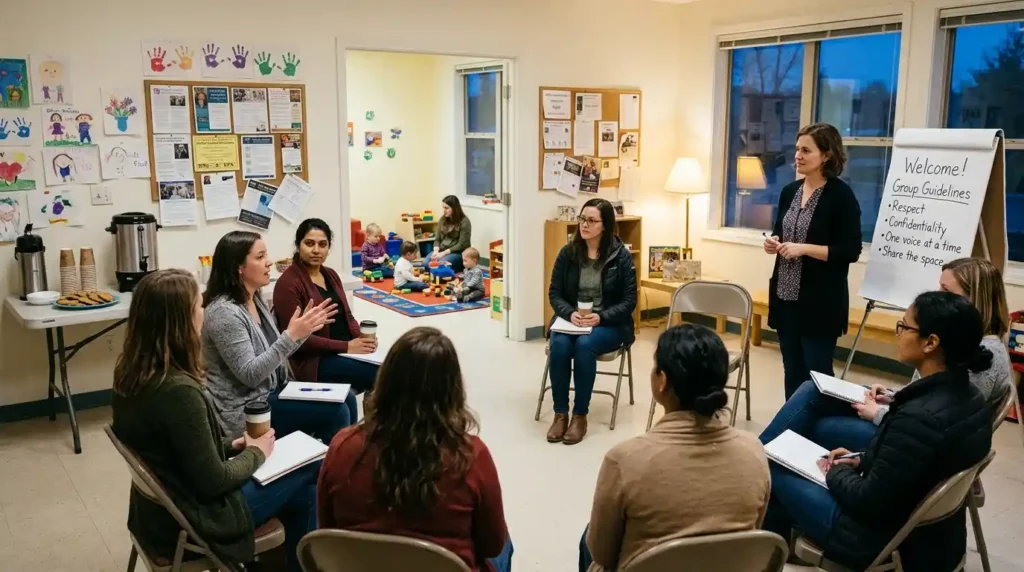
Format decides whether you finish. Saoirse’s first try was a live class at a time she couldn’t make. Her second was a group at a family resource center, with childcare in the next room. Triple P alone offers several formats. According to the University of Queensland, they include an online program, seminars, discussion groups, one-on-one consultations, and small-group programs. The standard group version runs eight sessions. Five are two-hour group meetings. Three are short follow-up contacts of about 15 to 30 minutes, per the NSW Evidence Portal. That’s a lot of structure. Saoirse said it kept her honest.
Is an Online Course as Good as an In-Person One?
I couldn’t find a head-to-head result I trust, so I won’t call one better. Online fits a tight schedule. Groups let you practice and get feedback. Saoirse needed the second part. She says she would have skimmed an online video and moved on.
How Long Do Classes Run?
The listings I reviewed ran from about four weeks to thirteen. Saoirse’s ran eight. She thinks six would have been too short and twelve too long. That’s only her opinion, and one parent’s opinion at that.
How Can You Tell if a Program Is Evidence-Based?
Saoirse asked me this before she paid anything. Good question. I look for a written manual first. Then I check that leaders get formal training. Then I look for published trials. Triple P meets the first two, and the NSW Evidence Portal notes its manuals and systematic practitioner training. On the third, it has a large research base. That includes a 2014 meta-analysis in Clinical Psychology Review by Sanders and colleagues. The program’s developers wrote it, and that matters. Independent critics have disputed some conclusions. I’d call the evidence good, with a caveat.
Is Triple P Evidence-Based?
It has a large research base, and independent reviewers still debate how strong it is. Saoirse’s course wasn’t Triple P exactly. It borrowed from it. She wanted to know if that counted. I said the ideas count more than the label does.
Does the Facilitator Matter?
Yes. Ask who leads the group and what training they have. Saoirse’s leader was a social worker who’d run groups for years. The room felt safe because of her. People said hard things out loud. I don’t think a video could do that.
What Does a Course Cost, and Do You Need a Certificate?
Prices varied a lot in my search, and I won’t invent a number. Free options exist. The CDC’s program costs nothing. By 2017, about 85,000 Queensland families had received free Triple P support after a state investment in 2015, according to program founder Matt Sanders. Hospitals, family resource centers, and faith groups often host low-cost groups. Saoirse’s was free through a county program. She paid only for gas. A certificate matters only if someone requires one. Mostly, nobody does.
Where Can You Find Free Classes?
Start with your pediatrician. They often know the local options. Family resource centers and hospitals are next. UK readers can ask a health visitor or a local family hub. Saoirse found hers through Cillian’s school counselor, almost by accident.
When Do Courts Require a Class?
In some custody or separation cases, a judge can order one, and the rules vary by court. Whether an online course counts depends on the court. Ask the clerk or your attorney before you pay. I’m not a lawyer. Saoirse’s situation didn’t involve a court, so I can’t speak to hers.
Conclusion
On the last night, the facilitator handed out certificates. Saoirse nearly left hers on the chair. What she kept was the index card she’d written on week three. It said one thing: say it once, then wait. Parenting classes didn’t make her calm. They gave her something to do while she waited. Cillian still slams the occasional door. Now she counts to ten and lets him come out on his own. Last week he did, unprompted, holding a drawing of the door.
FAQs
Are online courses worth it?
They can be, especially if your schedule is tight. I couldn’t find a head-to-head result showing online beats in-person, or the reverse. Saoirse needed live practice, so she chose a group.
Can I take free classes?
Yes. The CDC’s toddler program is free online, and many hospitals and family centers run free groups. Saoirse found hers through her school counselor.
How long do these programs run?
The listings I reviewed ran from about four weeks to thirteen. The standard Triple P group format is eight sessions. Saoirse’s lasted eight weeks.
Do courts accept online courses?
It depends on the court. Check with the clerk or your attorney before you pay. I’m not a lawyer, and the rules vary.
