
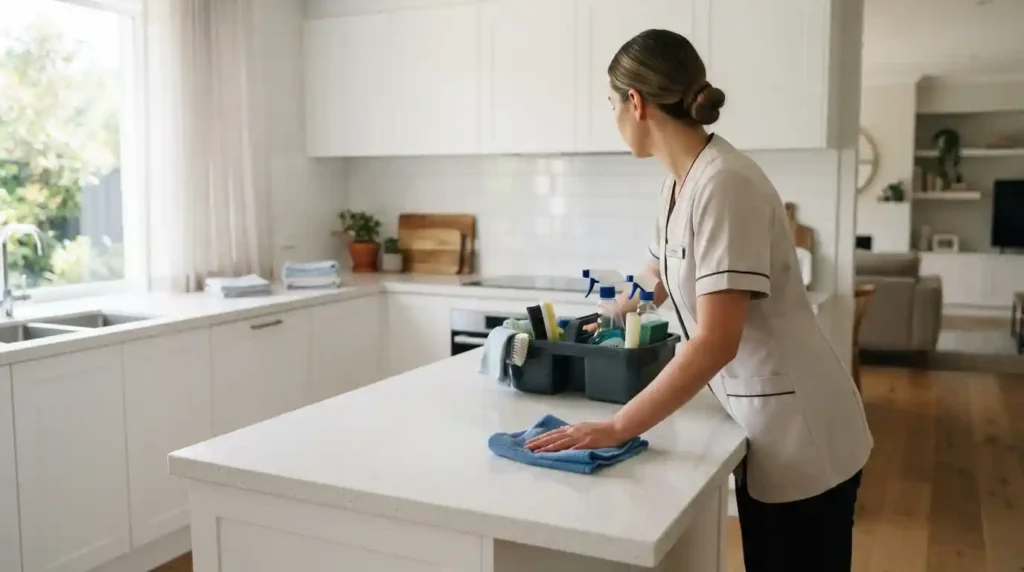
My neighbor pays $140 a visit. I pay $210. Her house is barely smaller than mine. Took me a while to figure out why. Turns out pricing for residential home cleaning isn’t really about square footage first. It’s about seven specific factors. Most have nothing to do with how big your house actually is. This guide walks through what actually moves the number. What a standard visit includes versus a deep clean. How to book something that fits your house instead of a generic package built for someone else’s.
What Does Residential Home Cleaning Actually Cover?
A standard visit hits the basics. Kitchens, bathrooms, floors, dusting, trash. Not the inside of your oven. Not behind the fridge. Not your baseboards, unless you’ve asked specifically. I learned this the hard way booking my first cleaning, expecting a deep clean at a standard price.
Standard cleaning nationally runs $120 to $280 per visit. That’s based on pricing data compiled across major home-service platforms. Hourly rates land somewhere between $25 and $60, depending on your market and crew size. Deep cleaning costs 50 to 100 percent more than standard. It adds tasks like inside-cabinet cleaning, baseboard detailing, appliance interiors, stuff a routine visit skips entirely.
What’s included in a standard residential home cleaning visit?
Standard visits cover kitchens, bathrooms, floors, dusting accessible surfaces, emptying trash. Doesn’t typically include inside appliances, inside cabinets, baseboards, or window tracks. Not unless you’ve added those specifically to your service scope. Ask for the exact checklist before booking. “Standard” isn’t some fixed industry definition everyone agrees on.
7 Questions That Decide Your Price
I ask these now before booking anything. Skip one and you either overpay or end up disappointed by what actually got done.
1. How big is your home, really?
Square footage still matters. Just not as much as people assume. A 1,200-square-foot apartment and a 2,200-square-foot house with the same room count can price similarly, if layout and clutter level match up.
2. Standard or deep clean?
Deep cleaning runs 50 to 100 percent more than standard. Covers baseboards, inside appliances, detail work a routine visit skips entirely. Book standard expecting deep-clean results? You’ll be disappointed. Every single time.
3. How often will you book?
Recurring service costs less per visit than a one-time clean. Weekly and biweekly plans typically discount 15 to 25 percent off one-off pricing. A cleaner never fights the buildup a single deep clean has to tear through.
4. What’s your local market like?
Urban markets run higher than suburban or rural ones. Purely labor costs, higher where rent and wages run higher too. I moved cities once. Watched my cleaning price jump nearly 30 percent for the same-sized apartment.
5. Pets in the house?
Pet hair and dander add real time to a visit. Some companies charge extra for it. Ask upfront whether pet-related cleaning comes included or billed separately. Policies vary a lot, company to company.
6. Do you want eco-friendly products?
Green cleaning sometimes carries a modest premium. The gap’s narrowed though, as demand grew. More than 45 percent of urban households now prefer green cleaning products, based on industry market research. That’s pushed more companies to offer it standard, not as some costly add-on.
7. One-time or a full contract?
One-time cleans cost more per visit than any recurring arrangement. Know you’ll need cleaning again within a few months? Ask about a contract rate upfront. Beats booking one-offs repeatedly at the higher price every time.
Move-In and Move-Out Cleaning: A Different Category Entirely
This isn’t standard cleaning with a different name slapped on it. Move-in and move-out jobs run $250 to $600. Reflects the heavier workload of an empty home, built-up grime nobody’s addressed in months, sometimes years.
I hired a company for a move-out clean once. Surprised how much longer it took than my usual biweekly visit. Empty rooms mean nothing’s blocking access, but every surface gets full attention since there’s no furniture hiding the neglected spots. Landlords and property managers often require this level of clean specifically to meet lease-return standards. Don’t assume your regular cleaner’s usual scope covers it automatically.
Is move-out cleaning worth paying for separately?
Yes, especially if your lease requires a specific cleanliness standard for your deposit return. A dedicated move-out clean covers appliance interiors, cabinet interiors, and detail work a standard visit skips. Matters directly for getting your full deposit back.
Recurring Residential Home Cleaning vs One-Time Service
I switched from one-time bookings to a biweekly plan after doing the math on my own spending. One-time cleaning costs more per visit. Never builds the kind of familiarity a recurring cleaner develops with your actual home either.
A recurring service typically knows which cabinet sticks. Which room accumulates dust fastest. Which tasks matter most to you specifically. That familiarity speeds up every visit after the first one. Only cleaning occasionally, before guests or after a mess? One-time service makes more sense there. Trying to maintain a baseline instead? Recurring service saves money and produces more consistent results over time.
Is weekly or biweekly residential home cleaning better value?
Biweekly usually offers the best balance between cost and cleanliness for most households. Weekly costs more overall but keeps a home consistently tidy. Biweekly still gets a meaningful discount over one-time pricing, without the added expense of a fourth visit every month.
Conclusion
Residential home cleaning pricing comes down to seven real factors. Not just square footage. Home size, cleaning depth, frequency, local market, pets, product preference, contract type, all of it moves the number. Standard visits run $120 to $280 nationally. Deep cleans cost 50 to 100 percent more. Recurring service beats one-time pricing every time you book again. Ask about the exact checklist before you book. You’ll know what you’re actually paying for instead of guessing.
FAQs
How much does residential home cleaning cost per month?
A biweekly recurring plan typically runs $240 to $560 monthly, based on two visits at $120 to $280 each. Weekly service costs more overall but keeps the home consistently cleaner between visits.
Is it cheaper to clean weekly or biweekly?
Biweekly costs less overall since you’re paying for two visits instead of four each month. Weekly service costs more but prevents the buildup that can make each individual visit take longer and occasionally cost more.
Do cleaning companies bring their own supplies?
Most companies bring their own products and equipment as standard practice, though some let you request they use products you already own. Confirm this before booking, since a few budget services expect you to supply your own cleaning products.
What’s the difference between standard and deep cleaning?
Standard cleaning covers surfaces, floors, and bathrooms in a routine pass, while deep cleaning adds baseboards, inside appliances, and detail work a standard visit skips. Deep cleaning typically costs 50 to 100 percent more and takes considerably longer per visit.
