
I saved about $600 painting my own living room. Lost almost as much on a flooring project I should’ve hired out. That’s the honest truth nobody puts on the front of a blog post. Some projects genuinely save real money. Others cost you more once tool rentals, wasted materials, and the professional you call anyway to fix your mistake all get added up. This guide breaks down which projects actually pay off. What real savings look like in dollars. Where the line sits between smart DIY and an expensive lesson. No guessing here, just what actually works.
Why DIY Home Improvement Saves Money on Some Projects and Not Others
Labor is the real number to watch. Most contractor quotes break down to roughly 50 to 80 percent labor, 20 to 50 percent materials, depending on the job. Skip the labor, keep the materials cost, and that’s your savings. Simple math. Except it only works cleanly on certain kinds of projects.
Painting’s the clearest example. Interior painting runs 65 to 80 percent savings doing it yourself. Paint and supplies are cheap, the skill ceiling’s low. Now compare that to something skill-intensive, custom cabinetry, structural work, and DIY savings drop to 0 to 25 percent fast. Tool rental. Wasted material from mistakes. The professional you sometimes end up hiring anyway to fix what you started.
What DIY home improvement projects save the most money?
Interior painting, cabinet hardware swaps, and faucet replacement, typically 70 to 95 percent versus hiring out. Minimal specialized tools needed. Small mistakes forgive themselves. Swapping cabinet knobs alone runs 85 to 95 percent cheaper than paying someone else, since the whole job is a screwdriver and twenty minutes of your time.
7 DIY Home Improvement Projects Worth Doing Yourself
I’ve done all seven of these in my own house at some point. Some went smoother than others. All seven genuinely saved real money without needing skills I didn’t already have.
1. Interior painting
A full room typically costs $300 to $500 in paint and supplies versus $1,000 to $3,000 hiring a painter. I painted my own living room for about $280 total. Brushes, roller, two coats. Took a weekend instead of the week a crew might’ve needed to schedule around.
2. Cabinet hardware replacement
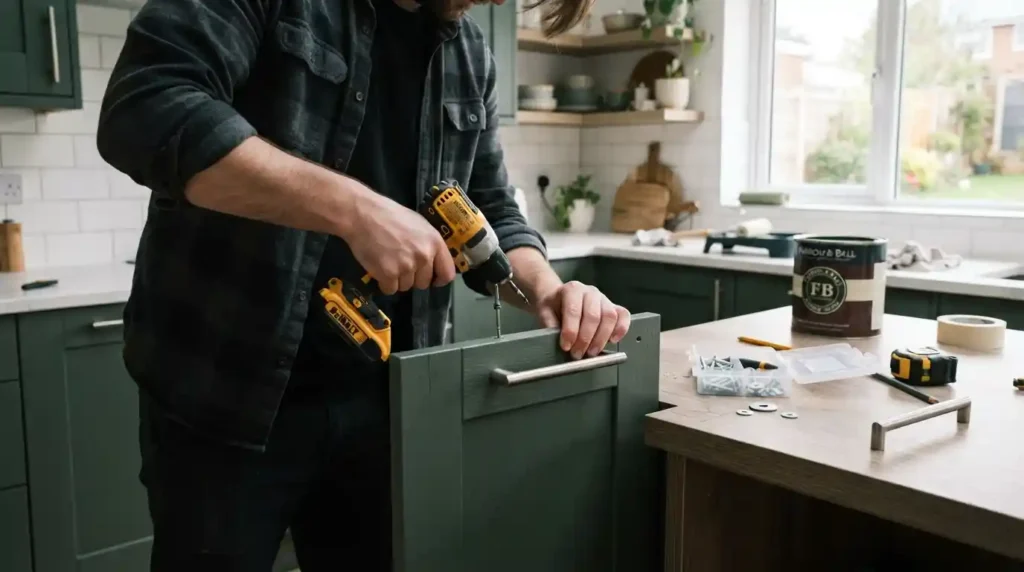
New knobs and pulls run $50 to $150 for a whole kitchen doing it yourself. Several hundred more paying labor on top of the hardware cost. Genuinely a twenty-minute job with a drill and the right template.
3. Kitchen backsplash installation
A basic tile backsplash costs $200 to $400 in materials, well under half of typical installed pricing. Forgiving work too. Small mistakes hide easily behind grout lines, something I learned firsthand doing mine slightly crooked in one spot nobody’s ever noticed.
4. Showerhead and faucet replacement
Both run 70 to 85 percent cheaper doing them yourself. Parts cost the same either way. Labor’s genuinely simple with basic hand tools, nothing you don’t already own.
5. Drywall patching
Small holes cost next to nothing to fix. A patch kit and some joint compound run under $50. Calling someone out for a repair that takes them fifteen minutes anyway just isn’t worth it.
6. Weatherstripping and air sealing
This one saves money twice. Once on the install, again on your energy bill afterward. Materials run $50 or less per door or window. Genuinely beginner-friendly, with payoff you notice within a season.
7. LVP flooring installation
Vinyl plank flooring saves 60 to 75 percent doing it yourself for a straightforward room. Needs more patience though, and a rented flooring nailer. Worth it once you clear roughly seven to nine uses of rental cost.
3 DIY Home Improvement Projects to Avoid
I learned two of these the hard way. Trust me on this list specifically. Some jobs look DIY-friendly on YouTube and turn expensive fast once you’re actually doing them yourself.
Electrical panel work
Skip this one entirely without a license. Beyond the actual safety risk, unpermitted electrical work can knock 15 to 25 percent off your home’s resale value if it’s discovered during a sale. Insurance companies can also deny claims tied to unpermitted work, full stop.
Structural wall removal
Load-bearing walls need an engineer’s assessment before anything gets touched. No exceptions here. I’ve seen enough DIY disaster threads to know a mistake here isn’t a redo. It’s a real structural problem costing multiples more than the professional consultation would’ve cost upfront.
Large-scale plumbing rerouting
Minor fixture swaps are fine. Rerouting supply lines or waste stacks is a whole different category. A botched plumbing job risks water damage costing far more than the labor you tried to save, and it often needs permits you won’t get retroactively without real headaches.
Does skipping permits actually save money on DIY home improvement?
No, it usually costs more down the road. Unpermitted work can trigger a resale price reduction of 15 to 25 percent. Fixing it retroactively often costs three to five times more than getting the permit would’ve cost in the first place.
How to Budget a DIY Home Improvement Project Properly
Most people underbudget by skipping two things. Waste allowance and contingency. I’ve made this mistake myself, running out of matching flooring mid-install and waiting three weeks for a reordered batch that didn’t quite match the original run.
Add 10 percent extra material for waste, cuts, and mistakes. Add another 15 percent contingency on top of your total estimate for the real unknowns, a wall that isn’t quite square, hardware that doesn’t fit the way the tutorial promised. Together that’s a 25 percent buffer over your initial materials estimate. Saved me from a mid-project scramble more than once now.
How much extra material should I buy for a DIY project?
About 10 percent more than your measured amount, to cover cuts, mistakes, and pattern matching. For flooring specifically, buy from the same batch number if you can. Dye lots vary slightly between production runs, and mismatched flooring is obvious the second it’s installed.
Conclusion
DIY home improvement genuinely saves money, but only on the right projects. Painting, hardware swaps, simple fixture replacements, these save 70 percent or more with minimal risk attached. Electrical panels, load-bearing walls, major plumbing reroutes belong to professionals, no argument there, since the cost of a mistake dwarfs any labor you’d save. Budget an extra 25 percent for materials and contingency. Pick projects that actually match your skill level, and you’ll come out ahead more often than not.
FAQs
What DIY home improvement projects are best for beginners?
Interior painting, cabinet hardware replacement, and drywall patching are the most beginner-friendly, since mistakes are cheap to fix and the tools required are minimal. Start with one of these before touching anything involving power tools or specialized skills.
How do I know if a home improvement project needs a professional?
Anything involving electrical panels, load-bearing walls, gas lines, or major plumbing rerouting needs a licensed professional, both for safety and for keeping your home insurance intact. If a project requires a permit, that’s usually a strong sign it’s outside beginner DIY territory.
Does DIY home improvement actually increase home value?
Yes, done well and to code, projects like kitchen updates and bathroom fixture upgrades can meaningfully boost resale value. Poor quality or unpermitted DIY work does the opposite, sometimes cutting resale value by 15 to 25 percent if issues surface during inspection.
What tools do I actually need to start DIY home improvement?
A basic toolkit, cordless drill, tape measure, level, stud finder, hammer, screwdriver, handles most beginner projects. Specialty tools like a flooring nailer or tile wet saw are usually cheaper to rent than buy unless you’ll use them repeatedly.
