Searching “BetterThisWorld Money” usually means one of two things: you found the site’s budgeting content and want to know if the advice holds up, or you’re about to send money through it and want to know if that’s smart. This article answers both. The core point up front BetterThisWorld Money functions partly as a personal-finance content hub and partly as a payment or earning platform, and those two halves deserve very different levels of trust. The educational content is generally reasonable. The payment side has real red flags that independent scanners have flagged, and you should verify it yourself before any money moves. Below, I’ll walk through what the platform actually offers what third-party trust checks show, and a practical checklist you can run in under ten minutes.
What Is BetterThisWorld Money?
BetterThisWorld Money operates as a section of the broader BetterThisWorld.com site, mixing personal-finance articles with features tied to earning, donations, or payment processing. The content side covers budgeting frameworks, debt payoff strategies, and savings habits — the kind of material you’d find on any mainstream money blog. The platform side is murkier. Some pages describe micro-task earning, others reference creator payments or crowdfunding-style donations, and a few older pages have used language closer to investment returns.
That inconsistency matters more than it sounds.A genuine fintech business will always have an established and coherent description of their business model on every page, in their terms of service and in their regulatory disclosures if any. The reason why one site might be using both “make money by doing small jobs” and “build up your money via our platform” is that the actual business itself hasn’t decided which one they really are, or maybe vague statements work better in SEO than precise ones.
Is BetterThisWorld Money a Bank?
No, BetterThisWorld Money is not a bank, credit union, or registered broker-dealer. It doesn’t appear in FDIC or NCUA institution databases, which means deposits held through it — if any money changes hands directly — carry no federal deposit insurance. Any actual banking functions (holding your cash, moving it between accounts) would need to run through a separate, regulated partner bank, and the site should name that partner explicitly. If it doesn’t, treat any deposit-like feature as unprotected.
What Does the “BetterThisWorld.com Money” Content Actually Cover?
The blog content mostly covers standard personal-finance topics: budgeting methods, expense tracking, and debt repayment order. It leans on established frameworks rather than proprietary claims, which is a point in its favor. Where it falls short is specificity — you’ll find general advice like “track your spending” more often than sourced statistics, named institutions, or dated references you can independently confirm.
Is BetterThisWorld Money Safe to Use?
Safety here splits into two separate questions: is the content trustworthy, and is sending money through the platform safe? Independent website-scanning tools give a mixed picture, and the picture changes depending on exactly which domain you’re looking at, since BetterThisWorld operates across a few related URLs.
Scamadviser’s automated scan of betterthisworld.com returned a trust score of 71 out of 100, which the tool classifies as medium-to-low risk rather than an outright red flag — driven largely by the site’s age and a valid SSL certificate. Scam Detector’s independent review, by contrast, labeled the same domain “problematic,” citing registrant information redacted through a privacy service in Iceland. A related domain, betterthisworldmoney.org, scored far worse on Scamadviser — “extremely low,” with the tool explicitly flagging investment-style promises of easy profit as a warning sign. That gap between domains is the single most important fact here: don’t assume every BetterThisWorld-branded URL carries the same risk level.
Is BetterThisWorld Money a Scam?
Based on available evidence, no single source proves it’s an outright scam, but several verifiable warning signs mean you shouldn’t treat it as clearly safe either. Anonymized domain registration, inconsistent descriptions of how earnings work, and a much lower trust score on at least one related domain are the kind of pattern consumer-protection guides (including the FTC’s own scam-recognition resources) tell you to investigate further, not ignore. The honest answer is “unverified,” and unverified financial platforms should get small test transactions, not your full trust.
How BetterThisWorld Money’s Earning and Payment Model Works
Understanding the mechanics matters more than reading marketing copy, because payment flow tells you who actually controls your money at each step. Across the pages I reviewed, three separate money channels show up: micro-task payouts, creator or donor payments, and general “financial education” content that doesn’t move money at all. Each channel has a different risk profile, and lumping them together is where most confusion starts.
Micro-task earning — small paid actions like surveys or data tasks — typically pays cents to a few dollars per task on platforms of this type industry-wide, so treat any promise of substantial income from micro-tasks with skepticism regardless of the platform. Creator or donation payments usually route through a third-party processor rather than the site itself, which is actually a safety feature if the processor is a recognizable name like Stripe or PayPal, since disputes then go through that processor’s protections rather than BetterThisWorld directly.
How Do Withdrawals and Payout Limits Work?
Payout terms should specify a minimum withdrawal amount, a processing timeline, and any platform fee, but this information should live in clearly published terms, not buried or absent. If you can’t find withdrawal limits, fee percentages, and payout timing in writing before you earn or send anything, that’s a documentation gap worth pausing over — legitimate platforms publish this upfront because regulators and payment processors require it.
BetterThisWorld Money vs. Regulated Financial Institutions
It helps to see BetterThisWorld Money next to institutions that carry actual regulatory backing, because the contrast makes the gap concrete rather than abstract. A regulated bank or credit union publishes its FDIC or NCUA certificate number, insures deposits up to $250,000 per depositor per institution and answers to a federal examiner. A registered brokerage discloses its SEC and FINRA registration and must follow disclosure rules for any investment product. BetterThisWorld Money, as a content and payment site, does none of these things, and it doesn’t need to if it’s simply publishing articles and running a donation or micro-task feature — but you should know exactly which category it falls into before treating it like a financial institution.
| Feature | BetterThisWorld Money | FDIC-Insured Bank | Registered Brokerage |
|---|---|---|---|
| Deposit insurance | None confirmed | Up to $250,000 | SIPC coverage on securities |
| Regulatory registration | Not found in public databases | FDIC certificate | SEC/FINRA registration |
| Ownership transparency | Redacted WHOIS | Public corporate filings | Public filings, Form ADV |
| Primary function | Content + payments/earning | Deposit-taking | Investment execution |
Should You Trust BetterThisWorld Money With Savings or Investments?
No — treat it strictly as a content resource, not a place to hold savings or make investments. Nothing in the public record shows it operates as a deposit-taking or investment institution, so any money you send should be limited to what you’re comfortable losing entirely, the same rule that applies to any unverified crowdfunding or micro-task site.
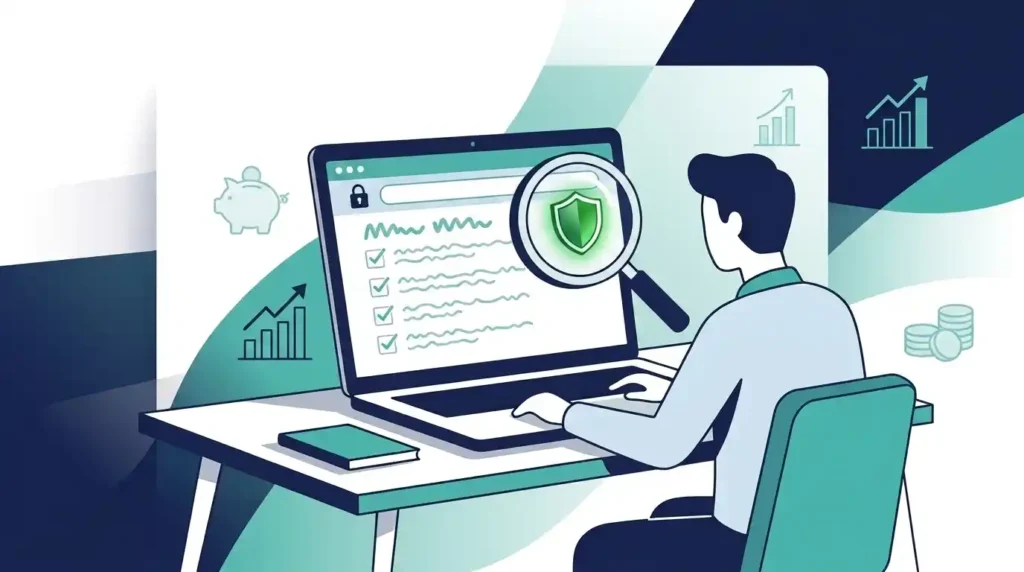
How to Verify BetterThisWorld Money Before You Send a Payment
Running your own check takes less time than most people assume, and it catches the majority of problems before money changes hands. I’ve used a version of this checklist on dozens of lesser-known finance and creator platforms over the years, and the pattern holds: the sites that pass every step almost always turn out fine, and the ones that stumble on two or more usually have something to hide.
Start with a $1 test transaction if the platform allows one — this confirms the payment actually processes and, more importantly, that a withdrawal actually completes before you commit more. Next, cross-check the domain on both Scamadviser and Scam Detector rather than relying on one tool, since as shown above, results can diverge significantly between related domains. Check that the site is using HTTPS encryption (the padlock symbol on the browser window), find the name of the actual owner of the business, not just the business name, and read through the cost disclosure prior to providing any payment details.
What Are the Warning Signs I Should Watch For?
Watch for guaranteed returns, urgent payment demands, requests sent via email links instead of the platform’s own secure checkout, and any pressure to act within hours. Legitimate platforms don’t create artificial urgency around payments, and any of these four signs alone justifies walking away.
Building a Purposeful Budget With BetterThisWorld Money’s Content
Setting the payment risk aside, the budgeting content itself follows fairly standard, defensible frameworks that work regardless of where you read them. TThe three-step method—tracking expenditures for seven days, distinguishing between needs and wants, and then allocating the 50/30/20 method (needs take up 50%, wants take up 30%, while savings and debt make up 20%)—is similar to the advice found in respected sources such as NerdWallet and the Consumer Financial Protection Bureau. This is not meant to be taken negatively; there’s a reason why certain methods are time-tested.
Where the content adds practical value is in small, concrete actions rather than abstract principles: a 24-hour pause before non-essential purchases, canceling unused subscriptions after a spending audit, and starting an emergency fund at $250 rather than the intimidating three-to-six-months figure most guides lead with. Building toward $600 in a year by saving $5 a week is achievable for almost anyone, and framing savings goals in small weekly increments genuinely reduces the abandonment rate compared to one large target — a pattern behavioral-finance researchers have documented repeatedly, even if this specific site doesn’t cite a study for it.
Safer Alternatives If You’re Not Convinced
If the verification steps above leave you uneasy, several alternatives deliver the same educational value without the payment-side uncertainty. For budgeting frameworks, the CFPB’s own consumer tools are free, government-run. And carry no payment risk whatsoever. For actual savings, any FDIC-insured online bank or NCUA-insured credit union gives you the deposit protection BetterThisWorld Money doesn’t offer. For beginner investing, a registered brokerage with public SEC filings replaces any vague “grow your money” promise with a regulated, disclosed product.
Conclusion
BetterThisWorld Money isn’t a proven scam, but it isn’t a verified, regulated financial institution either — and that gap is exactly where you need to do your own checking. The budgeting content is reasonable and worth reading. The payment and earning features carry real, documented uncertainty across scanning tools, inconsistent business-model descriptions, and no deposit insurance. Run the $1 test, check both scam-scanning tools, read the fee disclosure. And never send more than you’d accept losing outright. That approach protects you regardless of which way the platform eventually turns out.
Frequently Asked Questions
Is BetterThisWorld Money legit or a scam?
It’s not confirmed as either — public scam-scanning tools give mixed results depending on the exact domain, with betterthisworld.com scoring medium-to-low risk and a related site, betterthisworldmoney.org, scoring extremely low on trust. Treat it as unverified and run your own checks before sending money.
Does BetterThisWorld Money offer FDIC insurance?
No, BetterThisWorld Money is not found in the databases maintained by FDIC or NCUA, meaning that deposits with it will not be covered by federal deposit insurance. Deposit money with an FDIC insured bank or NCUA insured credit union.
How much can you actually earn from BetterThisWorld Money’s micro-tasks?
Realistically, expect cents to a few dollars per task, in line with micro-task platforms industry-wide, not a meaningful income source. Be skeptical of any language suggesting otherwise.
What’s the safest way to test BetterThisWorld Money before trusting it fully?
Send a small test payment, such as $1, and confirm you can withdraw it without issues before committing more. Combine that with checking the site on two independent scam-scanning tools rather than one.

2 thoughts on “BetterThisWorld Money: 7 Verification Steps to Protect Your Cash Before You Sign Up”